Thursday, March 13, 2008

Lucknow and the Sleeperclass Express

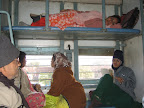
The IAWS (Indian Association of Women's Studies) national conference was held in February in Lucknow, a city in the North state of Uttar Pradesh. My work sent me and eight coworkers to attend. As the office was paying for our transport, we took a direct train in sleeperclass. Sleeperclass is not as classy as it sounds; it comes after 1st class AC (air conditioned)(pointless; for the money you may as well fly); 2nd class AC (how I traveled before; has two tier bunks, six total in one berth) and 3rd AC (also tried this before; two three-tiered bunks and one two-tiered bunk, so eight total in one berth). Sleeperclass is also eight in a berth, but no sheets, pillows, face towels or blankets are provided (as is the case in 1st-3rd). It is also packed with people: those who have tickets it general unreserved (which comes after sleeperclass, and is supposed to be miserable), those who have unconfirmed reservations (so no reserved beds). Also in sleeperclass the windows have bars and windows that you can put up and look through, enjoy the breeze, throw trash out of, etc (while in 1st-3rd class there are permanent hard plastic windows that don't open). People who have unreserved or unconfirmed ticket, sit on other people's beds during the day, huddle together on the floor, and sometimes try and crawl into other people's beds in the night (so I've heard).

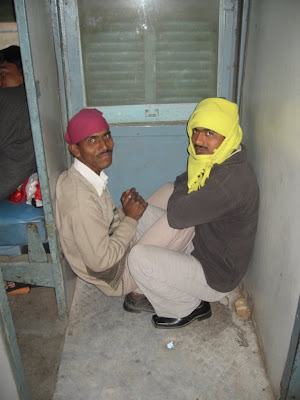
Men huddling by the door on the train floor


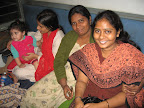
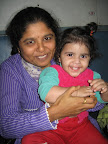
Tuesday morning, we got on the train at 8:00am with plenty of home cooked food, fruit and snacks in preparation of our 32-hour journey. We ran onto the train and desperately looked for places to put our luggage. The group was spread out between two cars, and none of our seats were together; after trading with various people over the hour we finally had several of us spread out in three berths in the two cars. One of these berths had two Muslim women with a 7-month old baby, and another had a 1 1/2 year old. The older baby, Arpita, that I am holding in the photo had a deep belly laugh that was contagious. She laughed every time she saw my face, and after about 20 hours on the train took to calling me "Amma" (Mother in Hindi). After a couple hours, one of my coworkers picked up the 1 1/2 year old and took her to the berth our other coworkers were in (in the same car). We had the babies play together, and then brought the baby to the other car to see our other coworkers. I was really nervous - it was one thing to bring her to another berth, but to another train car without permission?! Once in the other car, my other coworkers passed her around, fed her raisins, and enjoyed her laugh. I just imagined what would happen if some stranger on a train took a fellow passenger's baby to another train car and gave it food! (We'd probably create panic among the parents and then get arrested.) But in India, you can generally play with babies on the train; whenever I see babies and little kids in public, whether waiting in a queue, on the train or bus, at the mall, on the street, I will go up to them and touch their cheeks, let them wrap their little fingers around my pinky finger, ask them "Me peru emeti?" (Telugu for "What's your name?") - just because I can.
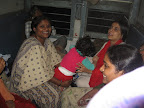
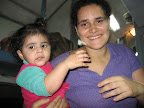
Sleeperclass is a trip. Every 5-15 seconds, LITERALLY, there is someone, whether from the cafeteria car or someone who has just climbed on the train, selling something. All day and into the night you hear, "Chai, coffee, chai chai" "samose!" "cutlet, omelet" "pani water" and various languages of people selling fruit, chips, snacks, groundnuts, ice cream, keychains, newspapers, magazines, toothbrushes, luggage chains, carved wooden objects, people begging for money, singing songs for money, cleaning your berth with a broom for money, hijras clapping the signature "hijra clap" and demanding money, and every 15 hours or so a ticket collector asking to see a ticket.
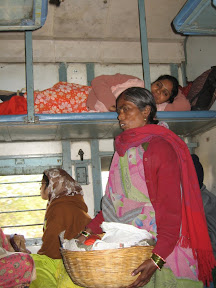

I cannot tell what this woman is selling; probably nuts or flavoured fried dal (lentils) judging by her basket and her scooping cup.


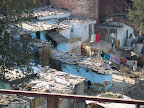
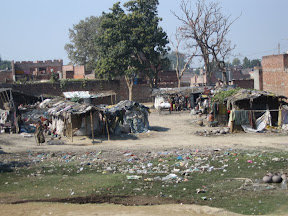
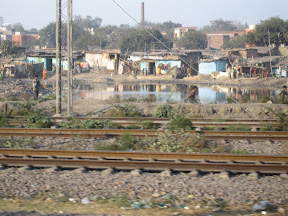
The amount of people at first had me feeling sweaty and a bit claustrophobic, but after the train began moving I could walk in the aisles and arrange a seat near my coworkers (the beds are seats during the day, and you put up the backrest as the middle bunk when people go to sleep at night, so there's generally about 10 people sitting in a berth at any given time). You can go stand in the doors in between the train cars and look out as the landscape passes by, which is great if you need a breather, a photo, or just to relax and enjoy the beauty, garbage, people, huts, buildings, animals, and other sights out the train window.

Lucknow was COLD. I forgot what the cold felt like (it's now summer in Hyderabad, as of about 10 days ago). My coworkers were not used to the weather and some were unprepared (I advised some to bring closed-toed shoes and socks but they told me they didn't own either, since they are unnecessary in Hyderabad). Almost all of my coworkers have never seen snow.
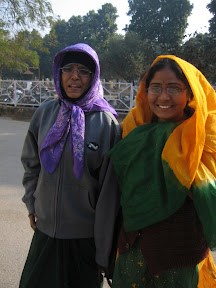
My coworkers, Santi and Anu, all bundled up.


The women's studies conference was amazing. It was incredible to hear presentations on the research being done here on women and gender issues. A lot of it touched on issues I had learned about during my senior year, including transgender issues, intersexed people, disability and sexuality, disability and feminism, feminism as elite (they talked about being a "caste" feminist, which I took to mean the Indian women's movement addressing the needs of upper caste women and leaving out dailt women's needs).

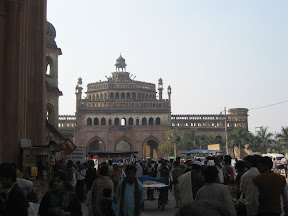
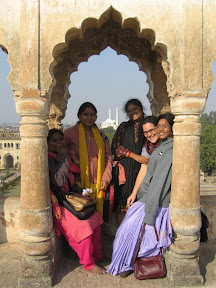
On the last day I met up with my friend Rachel, who is also an AJWS World Partners Fellow and whose placement is in Lucknow (the city that I was originally supposed to be placed in). We went shopping with a few of my coworkersOur coworkers bought us Indian priced tickets to go to this mosque (under a dollar, instead of foreigner's price of more than $7.00). We wrapped our heads and they put bindis on us (kind of a mixed message becauseif we were trying to look Muslim the bindi doesn't make so much sense, though sometimes Hindu women cover their heads, like when entering a temple or when the sun is blazing). We walked in and they said "They are English they can't use Indian tickets" but then they saw our bindis and said "they are Indian" (at least this is what happened according to my coworker Anu who dealt with the ticket rippers).
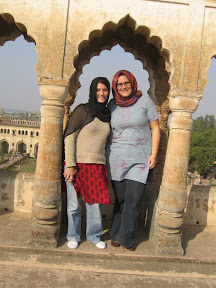
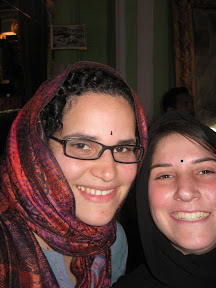
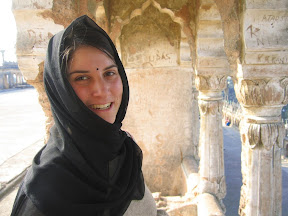
So maybe we don't really pass as Indian.. but I still think Rachel looks Muslim Indian with her head cover.

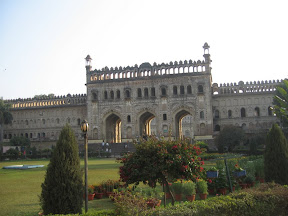
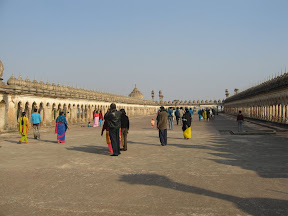
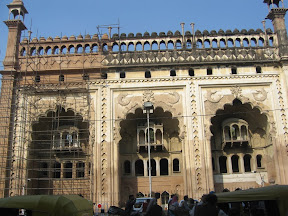
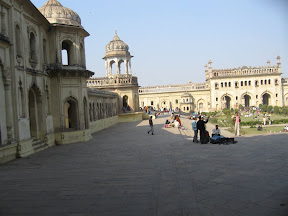
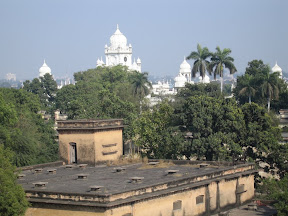
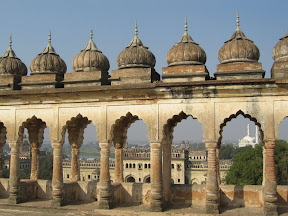
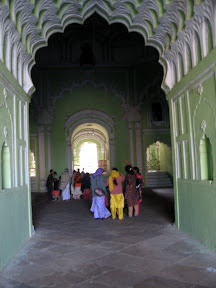
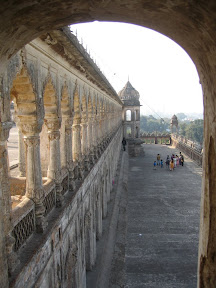
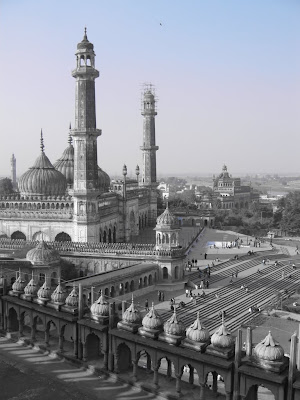
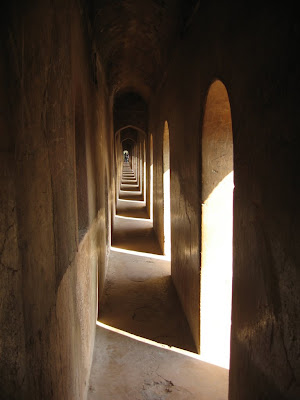
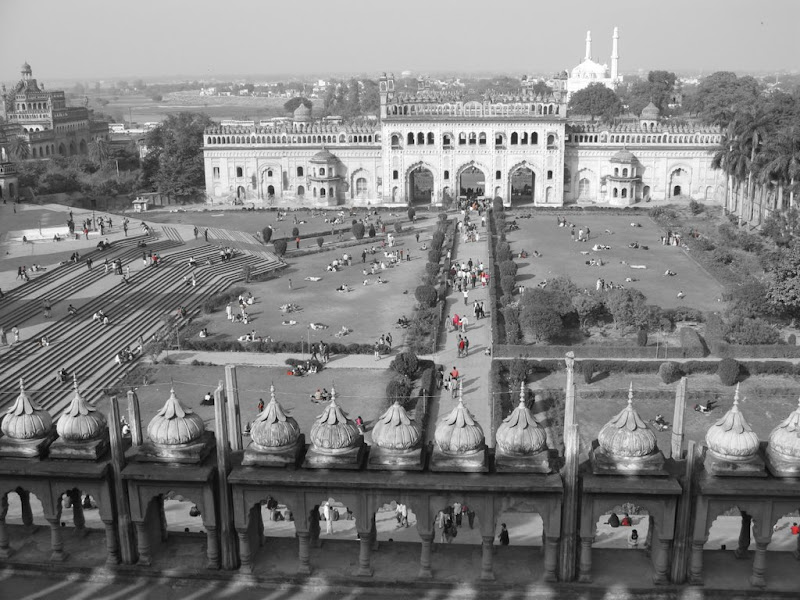
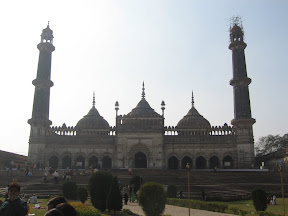
More photos from the day, sightseeing at Bara Imambara:


After having dinner with Rachel and a one-time-use clay pot of Kulfi (pista ice cream), I took an auto back to the center where we were staying. It must have been an extremely auspicious time because we passed 4 different wedding ceremonies in the 20-minute ride, and saw several other venues with "Ramesh weds Sita" signs (indicating other weddings).
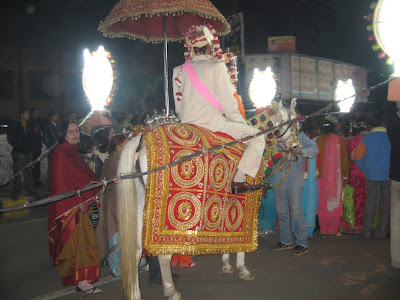

Groom riding a white horse


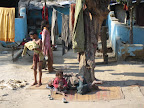
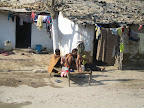
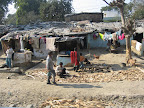
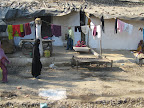
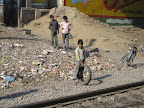
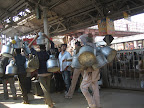
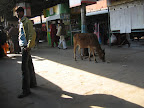
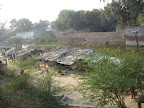
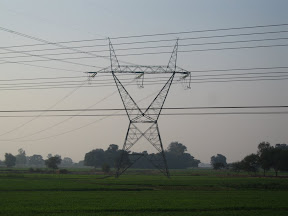
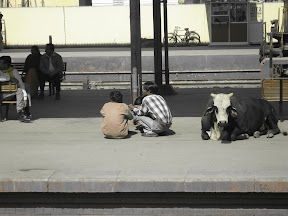
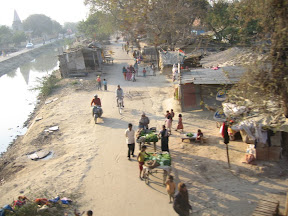
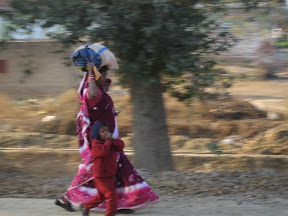
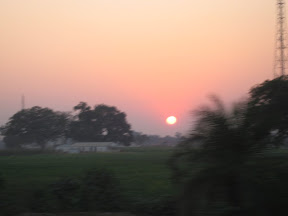
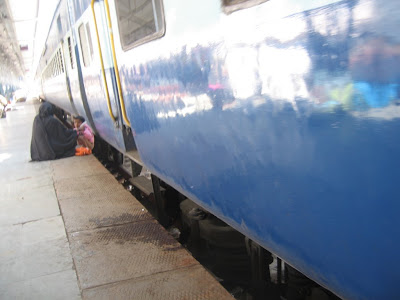
On the 32- hour train back to Hyderabad, I took a bunch of photos when we came into train stations, and out the window of the moving train. As has become my custom for traveling, I will include them in a photo montage...
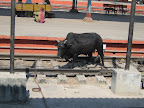
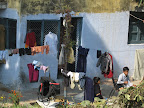
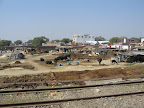
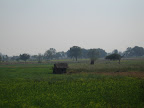
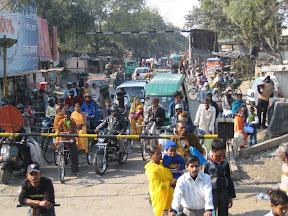
At one point when the train stopped, people waited at the train crossing barriers. Some people simply grabbed their bike/child/goat, climbed aboard, and went out the other side.
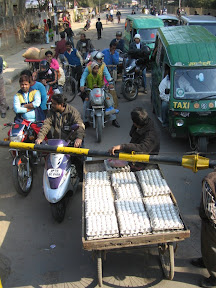
The living end

(pooping onto the tracks)

Monday, March 10, 2008

Happy Hyderabad

One of my favorite things to do in Hyderabad is to go to the lake. It's beautiful being by the water and it offers a cool breeze and a beautiful view. There is a giant standing Buddha statue in the middle of the lake that is only a couple decades old; however, supposedly Hyderabad used to be the center of contemporary Buddhist thought, long ago. There are places to eat there on the lake at Necklace Road, such as Eat Street, a food-court type place with lots of different restaurants including Subway and Cafe Coffee Day (though I get Indian food only). Next door is an extremely fancy restaurant called the Water Front, which has amazing Thai food. There is a cover charge of Rs300 ($7.50) on regular nights and Rs500 ($12.50) which goes towards your meal which will most likely end up costing a bit more than that. My American dollars mind thinks, that is NOTHING for a super nice meal at a restaurant that has live classical being played as you eat and high quality food and a gorgeous view of the lake... but my Indian Rupees mind says, my stipend is based on rupees and the Indian cost of living, not dollars, and it's the most expensive restaurant we have been to in the city, so it seems really expensive and is a real treat (ie - we make our parents take us when they visit).


My roommates, Milos and I at Water Front - I was stomach sick and couldn't eat but still had the Rs500 cover charge


Beautiful Shlayma and the beautiful view overlooking the lake outside the glass windows of Water Front at night


Temple-type thing overlooking the lake


Me and Blanca at the lake


The Buddha statue in the middle of the lake at sunset

Sunday, March 2, 2008

"Work" saree...

My coworkers informed me that a "work" saree is not a saree that you wear to work - it is a saree that has "work" on it, such as the beaded and sequined work on mine... They looked at my blog on Saturday when I was not here (I take Saturdays off for Shabbat; they take off only Sundays) and had a good laugh at my incorrect description.

Traditionally it seems that bindis were worn by married women, when they had their first child, maybe, and not unmarried women or widows... But most Hindu women I know wear bindis, and love when I wear one. When I first wore a bindi to work I got so many compliments, and sometimes when I am out in public with work wearing one strangers will compliment me on how beautiful I look in a bindi, and if I'm in full Indian attire, will sometimes even ask if I am Indian. I have never seen the Christian of Muslim women I know wear bindis, but have been told there are some Christian congregations or sects that wear bindis (Catholic for example, so I've been told). Sooo... bindis seem to be cosmetic, but also religious... my verdict on this one is inconclusive.

There is also Sindhur, which is the red line of colored powder in the part of a woman's hair. I have been told this is to keep a woman's sexual energy on her husband only. This happens more in the North; when I was in Lucknow I realized almost every woman had a bright red streak in her part, whereas in the South I see it much less.

Another way you can guess that a woman is married is if she wears toe rings. Not all women who are married wear toe rings - some just don't; others, such as certain Christian sects, don't wear any ornaments, including earrings, toe rings, or bindis. Similarly, not all women who wear toe rings are married - in Kerala, for example, toe rings are worn as fashion, by girls and married women alike; and one of my coworkers wears a toe ring for fashion (which warrants strange looks since she's not married).

And let's not forget Henna, or Mendhi as they call it in my area. Mendhi can be fun for decoration for no reason, or for use before weddings or other festivals. I believe it has no religious use and have seen Muslims and Hindus wear it, as well as Jews (me and Shlayma got henna together in January, and when Leah was here she put henna on me, Lily and herself. But hey, if you were thinking, 'oh, she tricked me, I thought she was implying there were Jews in India, how silly!' - Just you wait for my Mumbai post! (coming shortly))


My coworker Aparna's mendhi-decorated hands holding chana (chickpeas) during a workshop exercise

Shlayma and me getting Mendhi applied

But don't take my word for it... (because it wouldn't be the first time that I've been wrong)

I'll see you next time.
my space counters Travel Top Blogs

About Me

United States
I wrote this blog while working at a women's resource center in Hyderabad, India through a social justice fellowship through American Jewish World Service.

When I think of India, I think of...

I would like Planet Bollywood better if it had: