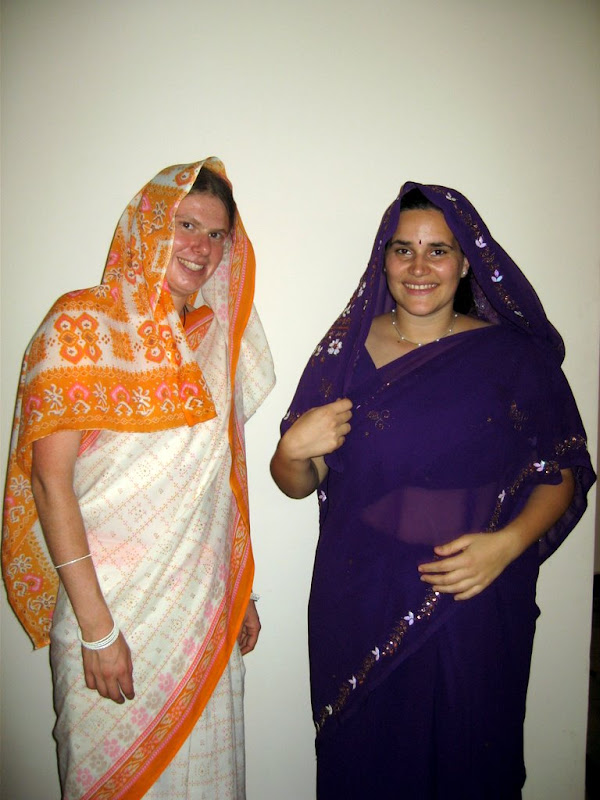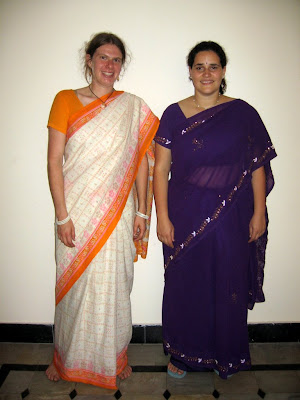
People wear sarees differently in different parts of the country. This is how we wrap sarees in Andhra, but we saw women wearing it differently in Mumbai. I'm sure we saw it differently at times in the North during orientation, but we didn't know enough about variations on saree-wearing back then to identify the differences. Traditionally, girls start wearing half sarees, which is a skirt, blouse, and piece of cloth acting as the front wrapped-around piece, when they begin menstruation, and then wear a full saree when they are married. However, today salwar kumeez's (pants and long kurta (top) suits with a matching dupatta (scarf) are quite common, and both unmarried and married women wear full sarees. Sometimes we see women wearing sarees over their heads, if the sun is hot or if they enter a temple. The Muslim women that I know in India also wear sarees or salwar kumeez's under their Burqa's (if they wear a burqa, which not all do).
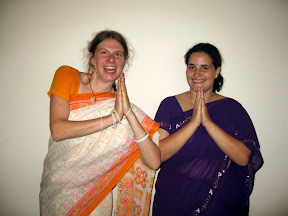
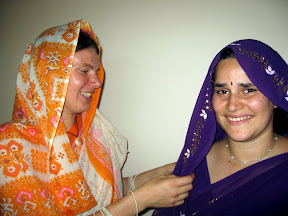
People here get extremely happy when we wear Indian things. I wear a bindi ("dot") to work everyday and get reprimanded by Padma, our tea lady, if I forget to wear it. Sometimes they will veto our bindis - both Lily and I have had coworkers forcibly remove our bindis and replace them with stickers they felt were more suited to our faces (Lily wore a bindi that was too large; I wore a tiny silver dot the size of a comma, and a coworker took it off my head, removed her bindi from her own forehead, and replaced mine with hers). For Leah and Lauren, who live in the village, if they wear the saree, they need to wear the bindi, and the matching necklace and earrings and bangles, and the positive reinforcement they get form coworkers, who are just so super excited to see them all dressed up, is enough that they wear the whole shebang quite frequently.